
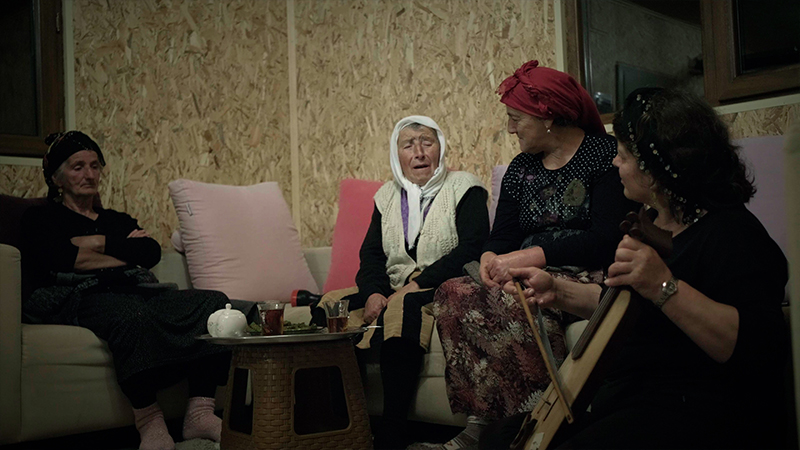
Just look at the headscarf
on her silver hair…
Oy, sister, I’d sacrifice myself
for your poor, aching heart.
I’ve been in the woods,
now I’ve come out to the open.
Lest your mother see you,
hide yourself right here.
Beyond the Spoken Word
Intergenerational Memory and Shared Grief: The Headscarf and the “Poor, Aching Heart”
The opening lines are built upon one of the most poignant material markers of female existence in the Eastern Black Sea: the traditional headscarf (çember). The gaze directed at the headscarf wrapped over aging “silver hair” is far from a mere aesthetic observation. In addressing the older woman as sister (aba—elder sister, aunt, or maternal figure), the speaker vows to sacrifice herself for her “poor, aching heart.” In regional oral culture, an aching, burned heart (yanmış yürek) encapsulates decades of unvoiced grief, ceaseless care labor, and personal losses swallowed in silence. This vow of empathy constitutes a quiet intergenerational pact: the younger woman recognizes her own impending fate beneath the older woman’s headscarf, while the elder’s lifetime of silent exhaustion is acknowledged and honored through this compassionate gaze.
Spatial Tension: The Sanctuary of the Woods vs. the Vulnerability of the Open
In the following lines, the physical landscape dictates the dramatic conflict. In rural Black Sea topography, the woods (orman) represent a dual space: a terrain of grueling physical labor (hauling firewood and feed), but also a secluded, unpoliced sanctuary away from the panoptic gaze of the village. The line “now I’ve come out to the open” marks an immediate threshold crossing: emerging from the privacy of the woods into the exposed, hyper-visible domain of domestic and communal surveillance. To come out to the open is to become vulnerable to judgment.
Domestic Surveillance and Female Solidarity: “Hide Yourself Right Here”
The warning, “Lest your mother see you / hide yourself right here,” introduces the mother not only as a familial figure, but as an enforcer of patriarchal discipline within the domestic sphere. The domestic gaze threatens exposure and reprimand. In response, the speaker does not judge or expose; instead, she creates an immediate pocket of shelter. Offering a spot to hide (“right here”) exemplifies the micro-tactics of everyday female complicity—forging fragile, quiet enclaves of freedom beneath the watchful eyes of family and tradition.