
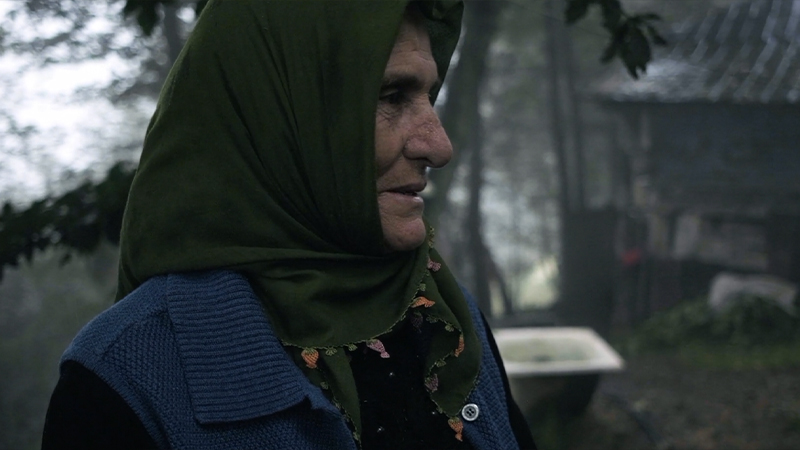
Her basket still on her back, gone for eternity…
Nuriye rolled down the cliff, her basket left behind on a stone.
“I will cross that river over there,” had said her brother,
A rolling stone hit and killed İnka’s Nuriye.
Go, set fire to her trousseau hidden in her chest…
And send her bloody headscarf to her grieving husband.
Dead branches hang dry at the top of the hornbeam tree,
Those lips of Nuriye, like autumn leaves, will wither and rot away.
Beyond the Spoken Word
The Bearing Body and the Material Seal of Labor: The Basket (Sepet)
A woman bearing on her back a basket or a massive load of grass or firewood is an image synonymous with the Eastern Black Sea region of Turkey. Yet, it is the woman who is the primary bearer of production, social reproduction, care labor, and biological reproduction—that is, the very continuity of life. While economic science classifies this woman drily as an “unpaid agricultural worker,” society tends to perceive her merely through the functions she executes, much like a tool—despite being a thinking, producing, and problem-solving human being.
The opening line of the song, “Her basket still on her back, / gone for eternity…”, signifies the unending cycle of labor imposed upon women. As Nuriye plummets down the cliff, the dramaturgical focus shifting away from her body and life toward the basket caught upon the rock (“her basket left behind on a stone”) is the starkest expression of this functional reduction. The woman perishes; what remains behind is her unfinished work, her basket suspended on the stone, and an endless, unvalued burden of daily toil.
Rebellion Against the Social Contract: “Ateş Takmak”, the Trousseau Chest, and the Bloody Headscarf
he second verse moves beyond passive grief into open defiance against the established order and a social system that commodifies the human body; grief turns into revolt.
According to an ancient and deeply rooted tradition across Turkey’s Eastern Black Sea region and much of Anatolia, the trousseau of a woman who dies young or unwed is not passed on to another. While some refrain from doing so to avoid ill fortune, this custom is primarily upheld out of profound reverence for her memory and labor, knowing “it belonged solely to her—it was her own labor, her rightful due.” For this reason, in some places the trousseau is buried in the earth, in others cast into flowing streams or the sea, or surrendered to the flames.
Nuriye was a newlywed bride. The phrase “ateş takmak” (literally to pin fire) is a deeply poignant, tragic subversion of takı takmak—the celebratory custom of pinning wedding gifts of gold and jewelry onto a bride’s dress or ceremonial sash. For a young woman who had only recently received these tokens of celebration, fire is now “pinned” to her trousseau and her cut-short life. This searing metaphor calls for turning Nuriye’s trousseau to ashes, ensuring it can never be used by another.. This ancient ritual must also be read as a dignified objection against allowing a woman’s handmade labor and truncated life to circulate like property within established gender roles. The line “Go, set fire to her trousseau / hidden in her chest…” incinerates not only the fabric and the stitching, but the social roles confined within that chest. Like every material entity, traditions are not eternal; their existence endures through the belief society invests in them. In the face of a youth cut short by death, the fire proclaims just how transient and invented those sanctified social roles truly are.
The “bloody headscarf” sent back to the husband (“And send her bloody headscarf / to her grieving husband”) carries layered meanings. On the surface, because a burial cannot be delayed, it serves as tangible proof of death and a visceral keepsake for a husband working far from home—ensuring Nuriye is forever remembered through that bloodstained fabric. Yet on a deeper plane, it is concrete evidence hurled back at the kinship structures and established order that leave human beings—most of all women and children—utterly defenseless: an open critique and an uncompromising confrontation.
Oral Counter-Memory: Keeping Nuriye Alive Through Song
The verse “Those lips of Nuriye, like autumn leaves, / will wither and rot away” juxtaposes the delicate youth of a woman lost in her twenties against the harsh, decomposing cycle of nature.
The song composed in her wake is an oral counter-archive; it records what official registries and lineages dismiss as a mere “unfortunate highland accident” through the lens of women’s labor, marital pressure, and geographical violence. Standing in place of an absent gravestone, the song transforms Nuriye’s erased story into an enduring memory of resistance across generations.